
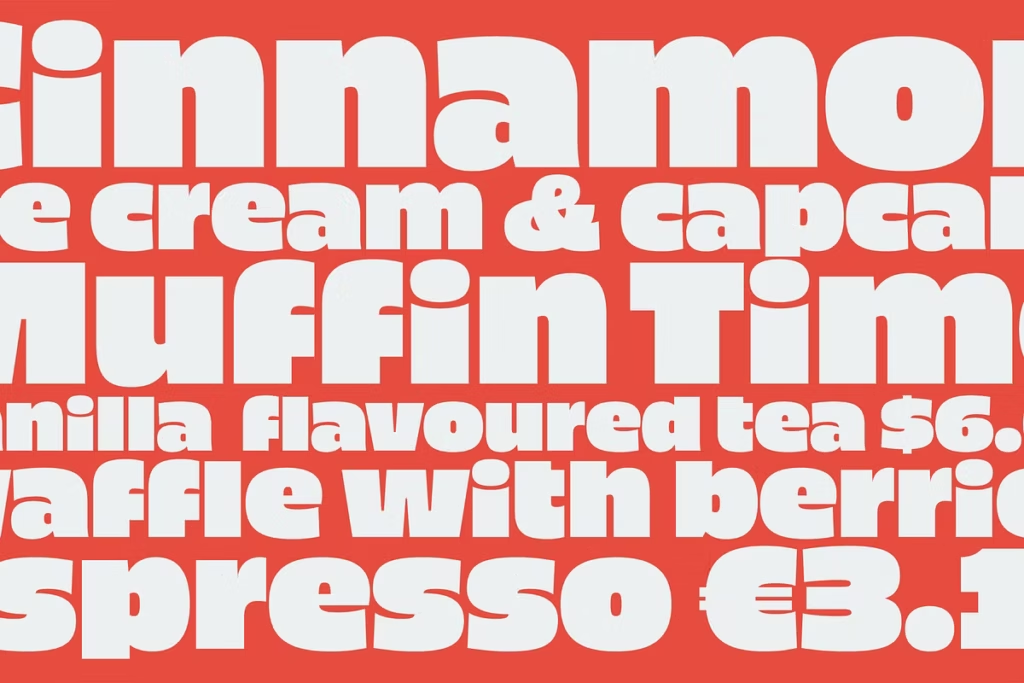
Piepie: Ultra-Heavy Typeface for Impactful Headlines and Captions
Introduction to Piepie
Piepie is a typeface made for titles and captions. I have used Piepie on my work. I see the weight and strong look work. Piepie works in media such, as magazines, posters and display signs. When I need a headline I pick Piepie because the design catches the eye. Piepie makes the message clear and easy to read.
Design Style
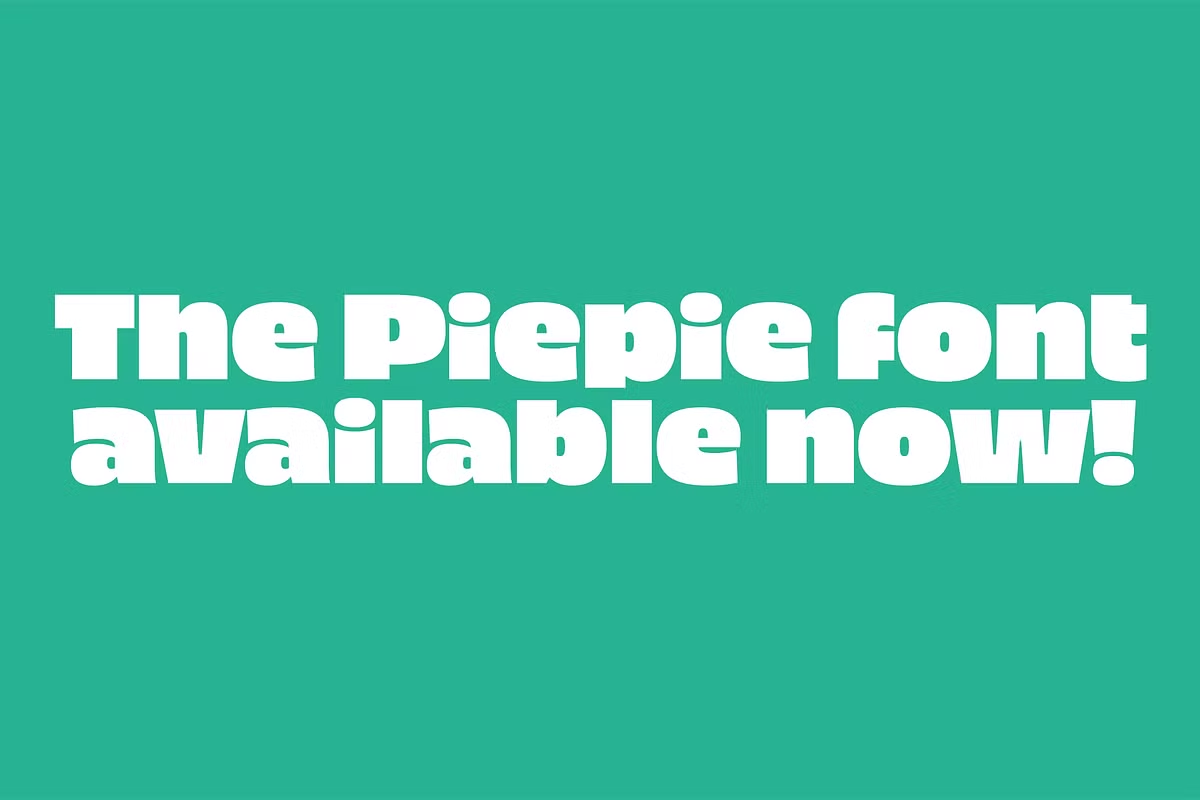
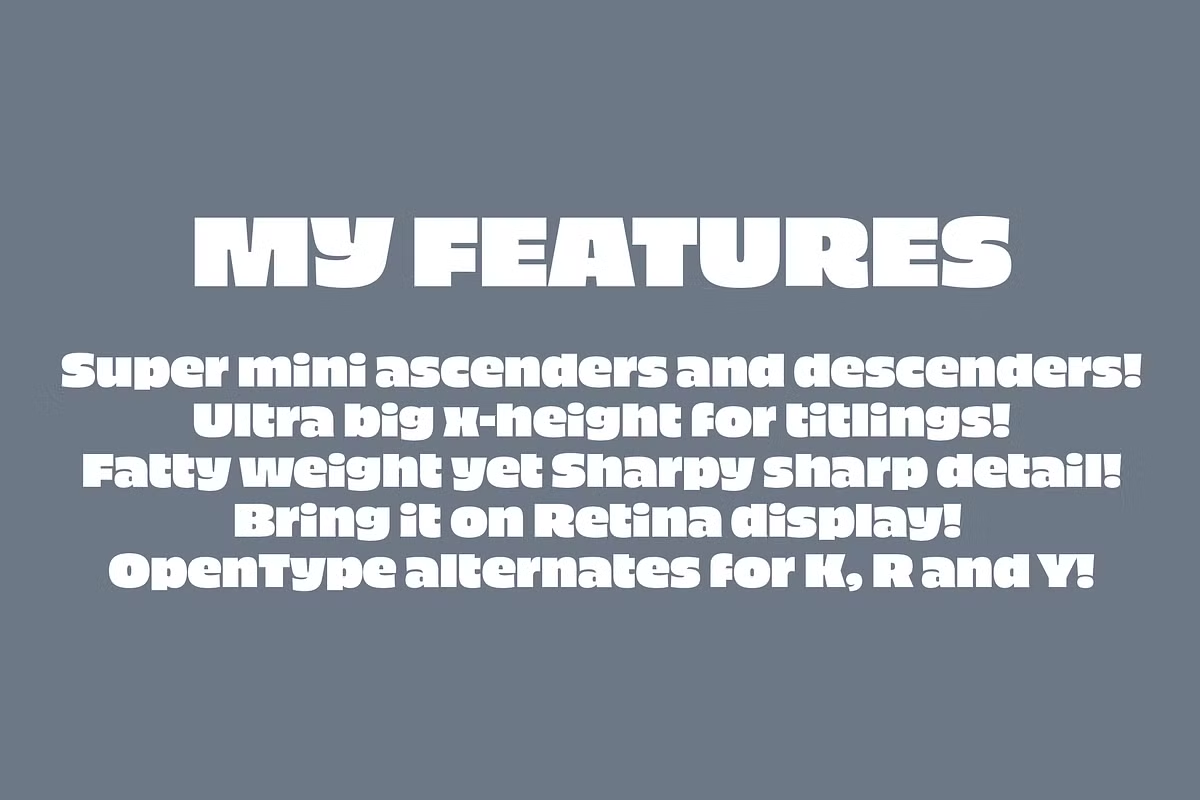
I notice the design of Piepie is, on purpose and bold made to give a look, on the page. With its weight Piepie has a big look and keeps sharp details that help readability. The Piepie typeface has ascenders and descenders. This gives a look that keeps a line. The compact look works well for headlines and small captions.
One of the features of Piepie is the big x-height. The ultra big x-height of Piepie makes Piepie more legible and more impactful. The ultra big x-height of Piepie keeps the typeface visible, from a distance. The typeface stays clear on billboards, banners and promotional materials. The typeface works well for visibility uses like billboards, banners and promotional materials.
I like that Piepie includes OpenType alternates for the letters K, R and Y. The OpenType alternates give designers flexibility in the choices they make. The OpenType alternates feel simple, to use. The OpenType alternates let me add a touch. The OpenType alternates let designers pick the variant that best fits the design context.
Character Sets and Glyphs
Piepie is, in the OpenType format (.otf). Piepie gives me 461 glyphs. With the set of glyphs I can write in languages and styles. The selection of glyphs lets me create type designs that meet the needs of my project.
I have used Piepie. Piepie supports encoding standards. The standards include Mac Roman, Windows 1252 Adobe Latin 1 and Adobe Latin 2. These standards make Piepie work, on the platforms and software. Piepie also includes all Adobe 3 characters. These characters let the typeface work in applications. Any designer can use the typeface, for projects.
The character set is large. I use the character set. See that it makes Piepie work with English. I use the character set. See that it also makes Piepie work with projects that need languages. I use the character set. See that it opens your design possibilities.
Use Cases for Piepie
Piepie works well in projects. I have seen Piepie shine when bold and clear lettering matters. Below are some ways to use the ultra‑heavy typeface Piepie:
- Headlines: Ideal for grabbing attention in newspapers, magazines, and online articles.
- Posters: Help you run the advertising campaign. Posters help you promote the event. Posters help you make a movie poster that has a statement. When you need a statement Posters are the tool that can deliver it.
- Branding: Branding can be used in logos and branding materials. Branding builds a brand identity.
- Social Media Graphics: To make eye-catching visuals. Social Media Graphics help the posts stand out in feeds.
- Display Settings: For exhibitions, presentations, and communication that needs emphasis.
When I use Piepie I see that Piepie’s special traits make sure the message is seen and remembered. That makes Piepie a useful tool, for any designer who wants to make an impact.
Pairing Suggestions
When you use Piepie you need to think about how Piepie works with the typefaces. This helps you create the design. Here are some pairing ideas that match Piepie style:
- Sans-serif Fonts: I like to pair Piepie with a clean sans-serif font, like Montserrat or Open Sans. Piepie and the sans-serif font together give a look. Piepie shines in headlines. The sans-serif font gives readable body text.
- Serif Fonts: I like to combine Piepie with a serif font such, as Georgia or Times New Roman because the combination adds a look to designs. The combination makes designs, for applications.
- Light Weight Variants: Pair Piepie, with the weights from the family or with similar typefaces. Piepie, with the weights creates a contrast and improves the visual order of your text.
I have found that choosing typefaces that match improves my design. Typefaces also make Piepie stand out without overwhelming the viewer.
Licensing and Availability
Piepie can be used for the projects and, for the projects. I have used Piepie for both kinds of work. Piepie fits my needs. The licensing options usually include a license. The standard license lets you use Piepie on the platforms. You can use Piepie for the print and the digital media. When you buy Piepie you should read the licensing terms. Reading the terms makes sure you follow the usage rights.
I have tried Piepie. When you get Piepie you get the features of Piepie. Piepie gives you access, to OpenType features. OpenType lets you use the typeface fully in your projects.
Piepie has the licensing and many features. Piepie is a choice, for a designer who wants to make an impression, with typography. I have used Piepie in my projects and Piepie helped me create clear font designs.
In the end Piepie is a typeface that gives a strong feel to headlines and captions. The bold weight, the sharp details and the large set of characters make Piepie a flexible choice, for design jobs from ads, to branding. If you are a designer or a creative hobbyist Piepie lets you share your message clearly and makes your design stand out. I have tried Piepie on projects. I see how it makes the text pop. The guide also offers pairing ideas. Shows the ways to use Piepie. Piepie belongs in any typography toolbox.